


Why Singapore Is Different for Data
Singapore is a uniquely connected city. The entire island feels like one giant, efficient Wi-Fi hotspot sometimes, but relying solely on public Wi-Fi is a rookie mistake. You need reliable data, especially if you're navigating via Google Maps, booking Grab rides, or trying to find that specific hawker stall in Maxwell Food Centre that everyone raves about. Unlike some other Southeast Asian countries, Singapore's telecom market is mature, highly regulated, and generally offers excellent service. But this doesn't mean all data options are created equal, especially for the short-term visitor.
I remember my first time trying to get a local SIM at Changi, after a red-eye flight from Tokyo. The kiosks were bustling, I was jet-lagged, and the whole process just felt like an unnecessary friction point before I could even get to my Airbnb in Tiong Bahru. That's when I started seriously looking into eSIMs for these kinds of trips. It's about minimizing the cognitive load when you're already dealing with immigration, luggage, and figuring out the MRT.
The Singaporean Connectivity Landscape
Singapore boasts one of the fastest and most reliable mobile networks globally. The major players, Singtel, StarHub, and M1, offer extensive 5G coverage across the island, from the dense financial district of Raffles Place to the quieter residential areas like Holland Village. You're rarely going to find yourself in a dead zone here, unlike some spots in, say, rural Bali beyond the Canggu beach clubs. This high baseline of quality means your primary decision isn't about finding coverage, but about convenience and cost.
The Case for eSIM in Singapore
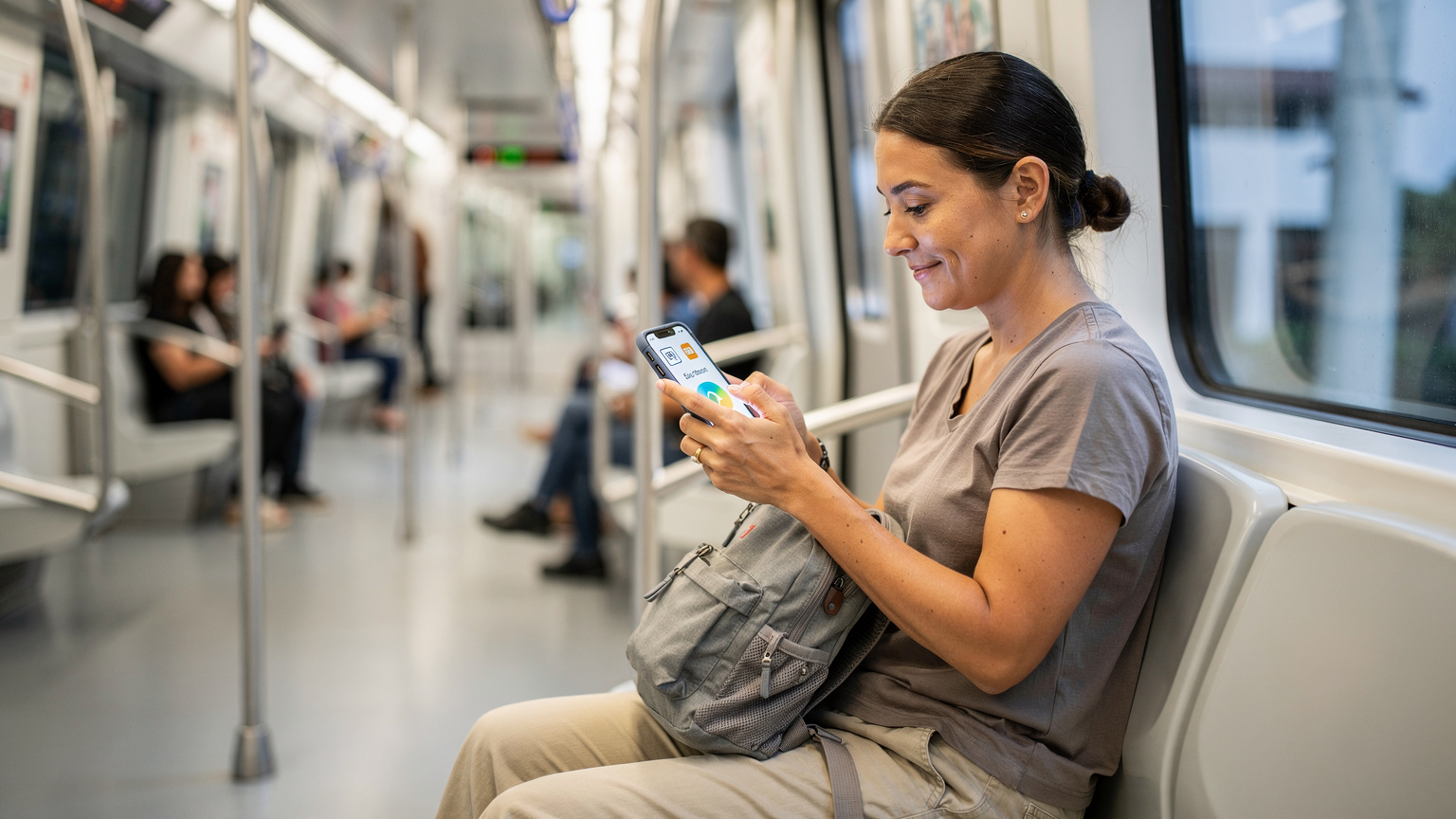
For most tourists, an eSIM is simply a smarter play in Singapore. You land, turn on your phone, and you're connected. No fumbling with tiny SIM trays, no waiting in line, no ID checks that seem to take forever. My phone's primary SIM remains active for calls and texts from home, while the eSIM handles all the data. It's a seamless transition that's hard to beat.
Instant Activation and Flexibility
The biggest selling point for an eSIM is its instant nature. You can buy it online days or weeks before your trip, activate it with a QR code or a few taps in your settings, and it's ready to go the moment you arrive. This eliminates that scramble at the airport. Plans are also incredibly flexible. If you're only in Singapore for a quick layover or a three-day business trip, you can grab a small data package. Staying longer? A 30-day plan is just as easy to secure. No long-term commitments, no contracts.
Keeping Your Home Number Active
This is a critical advantage for many. With an eSIM, your physical SIM from your home country stays in your phone. This means you can still receive calls and texts to your primary number, which is essential for things like two-factor authentication for banking apps, WhatsApp messages from family, or urgent work contacts. I've heard too many stories of people missing important calls because they swapped out their home SIM for a local one. It's a hassle you simply don't need.
Cost Efficiency for Short Trips
While local SIMs can seem cheap, the smaller, tourist-focused packages often come with limitations or expiry dates that make them less economical than an eSIM for shorter stays. For a 5-7 day trip, an eSIM typically offers a better data-to-dollar ratio, especially when you factor in the value of your time. Plus, you avoid the temptation to buy more data than you need, just to round out a physical SIM package.
Where to Buy a Local SIM in Singapore
If you're dead set on a physical SIM, Singapore makes it fairly easy. Just expect a bit more friction than an eSIM. You'll need your passport for registration, which is standard procedure due to local regulations.
Changi Airport SIM Card Kiosks
Your first opportunity will be right at Changi Airport. All terminals have multiple kiosks and telecom stores (Singtel, StarHub, M1) where you can purchase a tourist SIM. They're usually open long hours, but expect a queue, especially during peak arrival times. Prices are generally a bit higher than in the city, but the convenience is there if you need to be connected immediately after landing.
- Singtel: Look for them in Terminal 1, 2, 3, and 4 arrival halls.
- StarHub: Also widely available across all terminals.
- M1: Similar presence, often near baggage claim or currency exchange.
Convenience Stores and Supermarkets
Once you're in the city, you can find SIM cards at most 7-Eleven, Cheers, and FairPrice Xpress outlets. Just ask for a 'Tourist SIM' or a 'Prepaid SIM'. The staff might not be as fluent in explaining the plans as those at a dedicated telecom store, but it's a quick way to grab one if you're already out and about. Remember to bring your passport, even for these smaller outlets, as they still need to register your details.
Official Telecom Stores
For more detailed assistance and a wider range of plans, head to an official Singtel, StarHub, or M1 store. You'll find these in major shopping malls like ION Orchard, VivoCity, or Funan. They usually have English-speaking staff who can walk you through the various packages. This is a good option if you have specific requirements, like needing a local number for a specific duration or a plan with international calls, though for most tourists, this level of detail isn't necessary.
Singapore eSIM Options and Pricing
This is where EastESIM shines. We've vetted the providers to ensure you're getting reliable service and fair prices. For Singapore, you'll generally find plans from major regional carriers or aggregators. Here’s a snapshot of what you might expect for common tourist durations:
| Provider (Example) | Data Allowance | Validity | Approx. Price (USD) | Notes |
|---|---|---|---|---|
| EastESIM Singapore | 5 GB | 7 Days | $8-10 | Good for light users, short stays |
| EastESIM Singapore | 10 GB | 15 Days | $15-18 | Standard tourist option |
| EastESIM Singapore | 20 GB | 30 Days | $25-30 | Heavy users, longer stays |
| Regional eSIM (e.g., for Multi-Country Asia eSIM Strategy) | 30 GB | 30 Days | $40-50 | Covers Singapore + neighboring countries |
These prices are estimates and can fluctuate, but they give you a solid benchmark. The key is that you're buying precisely what you need, without excess. Also, if you plan to visit multiple countries in the region, a multi-country eSIM can be incredibly efficient. No need to swap out SIMs or buy new plans when you hop over to Malaysia or Thailand. I’ve used these extensively when bouncing between Kuala Lumpur, Singapore, and Bangkok, and they're a lifesaver.
How to Install a Singapore eSIM
The process is straightforward, even if you're new to eSIMs. If you ever get stuck, check out eSIM Stuck on Activating? 3 Fast Fixes to Get Online 2026, but generally, it's a breeze.
- Purchase Your eSIM: Go to EastESIM Singapore and select the data plan that fits your travel duration and usage habits. Complete the purchase online.
- Receive QR Code/Activation Details: You'll get an email with a QR code or manual activation details almost instantly.
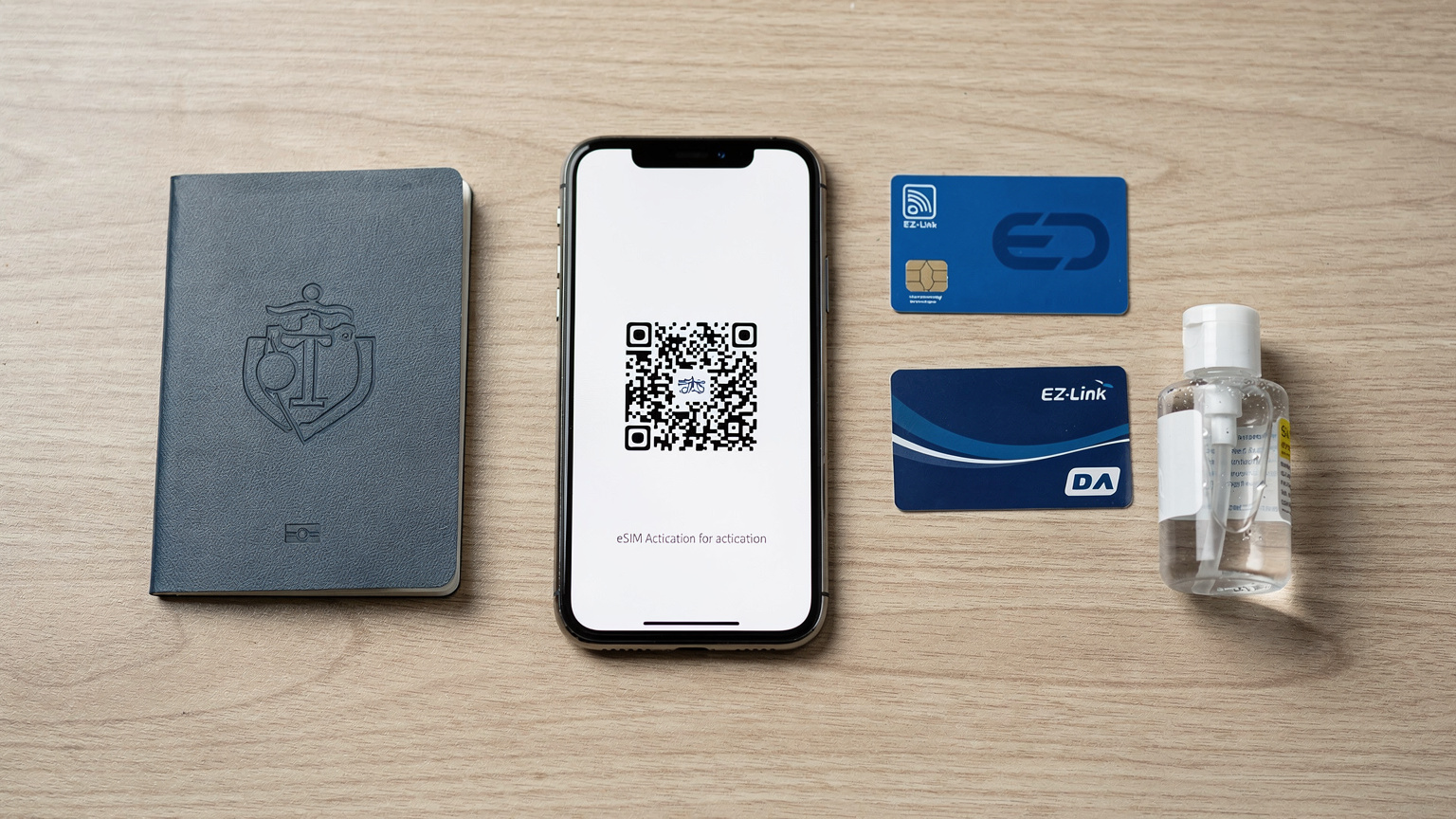
- Scan the QR Code: On your iPhone (Settings > Cellular > Add Cellular Plan) or Android (Settings > Network & internet > SIMs > Add more), scan the QR code.
- Label Your eSIM: Give your new eSIM a clear label, like 'Singapore Data'. This helps you differentiate it from your home SIM.
- Set Data Roaming: Ensure data roaming is turned OFF for your home SIM and ON for your new Singapore eSIM. This avoids unexpected charges.
- Activate Upon Arrival: Once you land in Singapore, simply select your Singapore eSIM for cellular data in your phone settings.
Local SIM Card Options and Pricing
For those who prefer a physical SIM, the local carriers offer a range of prepaid tourist plans. These are generally competitive, especially for longer stays or very heavy data users.
| Carrier | Plan Name (Typical) | Data Allowance | Validity | Approx. Price (SGD) | Notes |
|---|---|---|---|---|---|
| Singtel | hi!Tourist SIM | 100 GB (local), 3 GB (roaming) | 7-10 Days | SGD 15-30 | Includes local calls/SMS |
| StarHub | Travel SIM | 100 GB (local), 1-5 GB (roaming) | 7-14 Days | SGD 12-25 | Often bundled with attractions discounts |
| M1 | M Card Tourist SIM | 100 GB (local) | 7-14 Days | SGD 10-20 | Good for pure data needs |
These packages often come with a generous amount of local data (sometimes 'unlimited' at high speeds, then throttled), along with some local call minutes and SMS. Some even include a small amount of international roaming data for nearby countries like Malaysia or Indonesia. If you're staying for over a month, you'll need to look at longer-term prepaid plans, which might require more extensive ID verification.
Local SIM Card Registration Process
The process for buying a physical SIM in Singapore is pretty standard, but it does take time.
- Locate a Vendor: Find a telecom store, airport kiosk, or convenience store selling SIM cards.
- Choose Your Plan: Select a prepaid tourist plan that suits your data and validity needs.
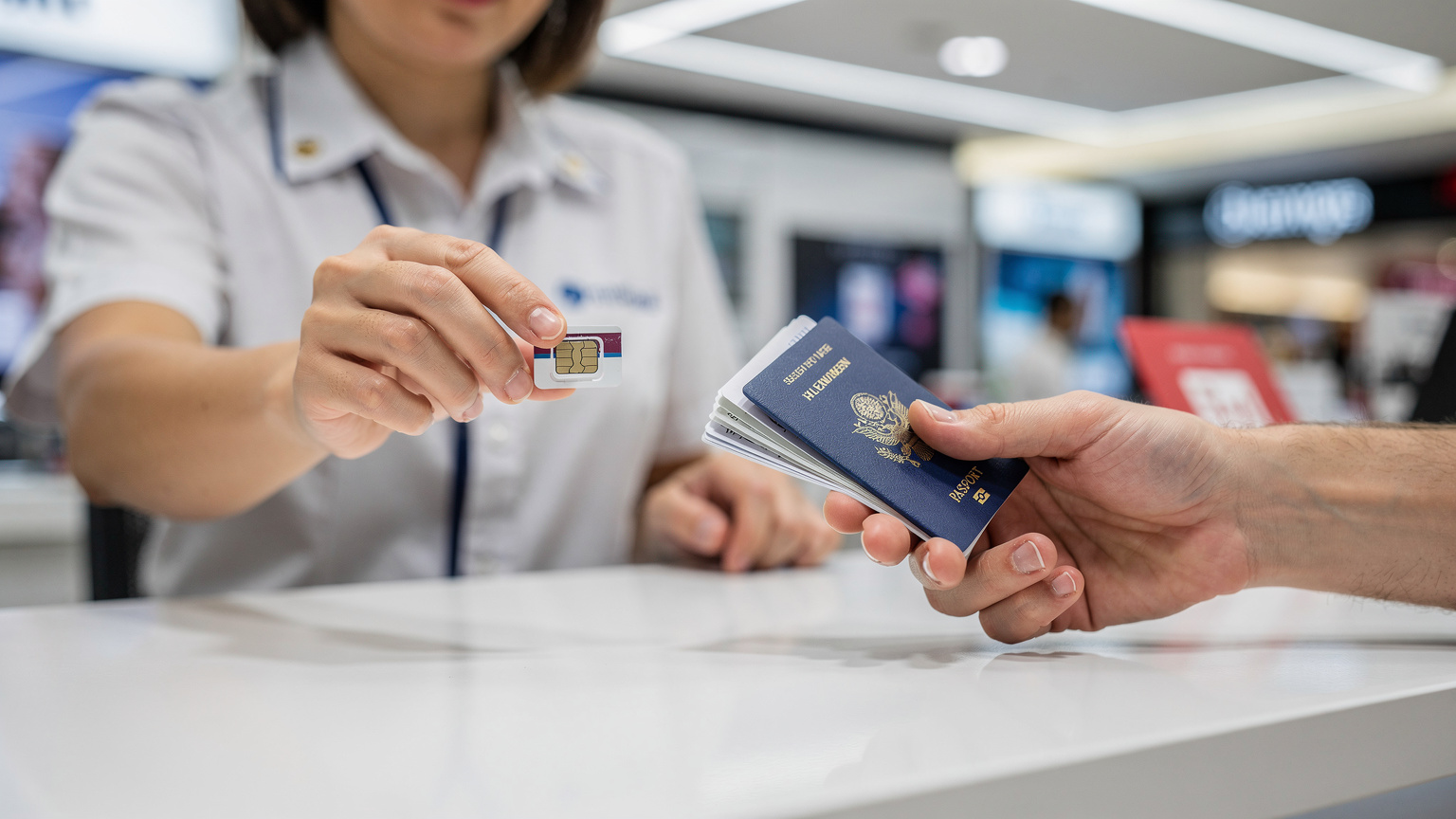
- Present Passport: Hand over your physical passport for registration. They will typically scan it and take a photo.
- Fill Out Form: You might need to fill out a short registration form with basic details.
- Payment: Pay for the SIM card.
- Activation: The vendor will usually activate the SIM for you, or provide instructions. This often involves swapping out your home SIM.
- Test Connection: Make sure your data, calls, and SMS are working before leaving the store.
This whole procedure can easily eat up 15-30 minutes of your valuable travel time, especially if there's a queue. And if you're not fluent in English, it can be even more cumbersome.
Data Speed and Coverage: Singapore Carriers
Singapore's mobile network infrastructure is top-tier. You'll find excellent 5G coverage across the island, regardless of whether you choose Singtel, StarHub, or M1. They all operate on similar frequency bands, ensuring broad compatibility with modern smartphones.
| Carrier | Primary 5G Bands (n) | Primary 4G Bands (FDD/TDD) | Typical Download Speeds (5G) | Coverage Reliability |
|---|---|---|---|---|
| Singtel | n1, n3, n78 | B1, B3, B7, B8, B20, B40 | 200-800 Mbps | Excellent, especially in urban areas |
| StarHub | n1, n3, n78 | B1, B3, B7, B8, B20, B40 | 150-700 Mbps | Very Good, strong in residential zones |
| M1 | n1, n3, n78 | B1, B3, B7, B8, B20, B40 | 150-650 Mbps | Good, improving rapidly |
From a purely technical standpoint, there's not a huge difference in day-to-day performance for a tourist. All three will easily handle streaming video, video calls, and rapid navigation. I've personally used all three on different trips, mainly for WhatsApp calls with my family and uploading large photo batches from my mirrorless camera, and haven't noticed any significant bottlenecks in the CBD or even out in Sentosa. The key takeaway here is that you don't need to stress over choosing the 'best' carrier in Singapore for speed, they're all consistently excellent. It's unlike trying to figure out Seoul's 5G carriers, SK Telecom vs KT vs LG U+, where there can be noticeable differences in specific neighborhoods.
Activation Headaches: eSIM vs. Physical SIM
This is where the rubber meets the road. I've spent enough time troubleshooting connectivity issues in various airports and hotel lobbies to know that a smooth activation process is priceless.
The eSIM Advantage: Pre-Arrival Setup
With an eSIM, you do most of the 'work' before you even leave home. Buy it, scan the QR, configure settings, and you're done. The actual 'activation' in Singapore is just switching it on. This means you can be connected before your plane even touches the tarmac, or at least before you've cleared immigration. Imagine stepping off the plane, needing to order a Grab or check directions to your hotel, and your phone just works. That's the eSIM dream.
"I landed in Singapore last year, and my eSIM was active the second I turned off airplane mode. I was checking my email and getting directions to The Work Project Capital Tower before I even reached baggage claim. That's what I call frictionless travel."
The Physical SIM Reality: Post-Arrival Hassles
With a physical SIM, you have to wait until you're on the ground. You need to find a vendor, stand in line, deal with ID checks (which can be a minor issue if your passport is damaged or hard to read), potentially deal with language barriers, and then physically swap out your SIM. And if something goes wrong, like the SIM not activating, you're stuck at a kiosk trying to troubleshoot instead of enjoying your trip. Plus, what do you do with your home SIM? Stick it in a tiny plastic bag? Hope you don't lose it?
What About a Local Number?
This is one of the few areas where a physical local SIM might have a slight edge, but even then, it's becoming less relevant for tourists.
When a Local Number Matters
- Local Deliveries/Services: If you're planning a longer stay, say a month or two, and need to order food delivery frequently (like from FoodPanda or Deliveroo) or use local services that require a Singaporean phone number, a local SIM can be useful.
- Banking: Some local banking apps, especially in countries like Brazil or India (think Aadhaar), are tied to a local SIM card. In Singapore, for tourists, this is less of an issue unless you're setting up a local bank account, which usually requires a long-term visa anyway.
- Co-working Spaces: While most co-working spaces like WeWork or The Great Room (I used the one in Ngee Ann City a lot) rely on email or app-based communication, some might ask for a local number for emergency contacts or specific services. However, a foreign number usually works just fine.
For most short-term tourists, a local number is simply not a necessity. WhatsApp is king globally, and everyone uses it for communication. Your home number for bank verifications is sufficient if you keep your home SIM active with an eSIM.
Multi-Country Asia Travel and eSIMs
If Singapore is just one stop on a larger Asian adventure, then eSIMs become an even more compelling choice. Swapping physical SIMs every time you cross a border is a tedious ritual I've long since abandoned. I’ve done the whole Multi-Country Asia eSIM Strategy, and it saves so much headache.
Seamless Border Crossings
Imagine flying from Singapore to Kuala Lumpur, or taking a ferry to Batam. With a multi-country eSIM, your data just works. No need to hunt for a new SIM at KLIA2 or worry about roaming charges. This is particularly useful if you're hitting up places like Thailand for Songkran or exploring the markets of Bangkok, where data is essential for navigating. The peace of mind alone is worth the slight price difference.
Cost Savings on Regional Plans
Often, a regional eSIM plan that covers Singapore, Malaysia, Thailand, and other nearby countries can be more cost-effective than buying individual local SIMs for each stop. These plans typically offer a larger data pool over a longer validity period, which is perfect for a backpacker or digital nomad spending a week or two in each location. The pricing models are designed for cross-border travelers, something local tourist SIMs rarely optimize for.
My Personal Take: eSIM Wins for Tourists
Having navigated the data landscape in dozens of countries over four years on the road, my strong recommendation for most tourists visiting Singapore in 2026 is to go with an eSIM. It's simply the most efficient, least stressful, and often most cost-effective solution.
The convenience of instant activation, the ability to keep your home number active, and the flexibility of data plans are paramount. While Singapore's physical SIM options are decent, they still require time and effort you could be spending exploring Gardens by the Bay or eating Chilli Crab at Newton Food Centre. Why add unnecessary friction to your trip?
For example, when I lived in the Jalan Besar neighborhood for a few months, paying about SGD 1,800 a month for a studio, my data needs were high, but even then, an eSIM handled it without a hitch. I would frequent the co-working space at The Workshop in Ang Mo Kio, where reliable Wi-Fi was always available, but I needed my own data for calls and backups. My data usage was usually around 40-50GB a month, and I found eSIM plans that easily accommodated that, often with rollover options if I topped up within a certain window. The only time a physical SIM was even a fleeting thought was for setting up a local bank account, which ultimately required a long-term visa anyway, making the point moot.
Don't complicate your travel. Grab an eSIM, enjoy Singapore, and spend your precious time and energy on what matters: the experience, not the connectivity setup. The only exception I'd truly make is if you have a visa that allows you to live there for extended periods and genuinely need a local phone number for specific, long-term administrative tasks. Otherwise, eSIM is the way to go.
Frequently Asked Questions
Do I need a local SIM card for banking apps in Singapore?
For most tourist banking needs, no. Your home country's number, kept active via an eSIM, is usually sufficient for two-factor authentication. Local banking apps in Singapore, like DBS or OCBC, primarily target residents, and setting up an account typically requires a long-term visa, not just a local SIM.
Can I use WhatsApp with an eSIM in Singapore?
Absolutely. WhatsApp is tied to your phone number, not the SIM card providing data. With an eSIM, your home number remains active for WhatsApp, allowing you to use the app seamlessly with the eSIM's data connection.
Is Wi-Fi widely available in Singapore if I don't get a SIM or eSIM?
Wi-Fi is quite prevalent in Singapore, especially in malls, cafes, and public transport hubs. However, relying solely on public Wi-Fi can be unreliable, slow, and potentially insecure. For consistent, fast, and secure connectivity for navigation, ride-sharing, and communication, a dedicated data plan (eSIM or physical SIM) is highly recommended.
How much data do I need for a 7-day trip to Singapore?
For a typical 7-day tourist trip, 5-10 GB of data is usually sufficient. This covers navigation, social media, light streaming, and messaging. If you plan heavy video streaming or large file uploads, consider a 20 GB plan. EastESIM offers various packages to match different usage needs.
What is the average cost of living anchor for a month in Singapore?
For a digital nomad, a studio apartment in a decent neighborhood like Jalan Besar or Tiong Bahru can cost around SGD 1,800-2,500 per month. Add SGD 800-1,200 for food, transport, and utilities, bringing the total cost of living to approximately SGD 2,600-3,700 monthly, excluding major entertainment.
Do I need a local number for Grab or food delivery apps in Singapore?
No, you don't. Grab, FoodPanda, and Deliveroo all work perfectly well with your home country's phone number. The apps send verification codes or contact you via your registered number, regardless of whether you're using a local SIM or an eSIM for data.

